Why Choice Fails Students: The Case for Integration Over Selection

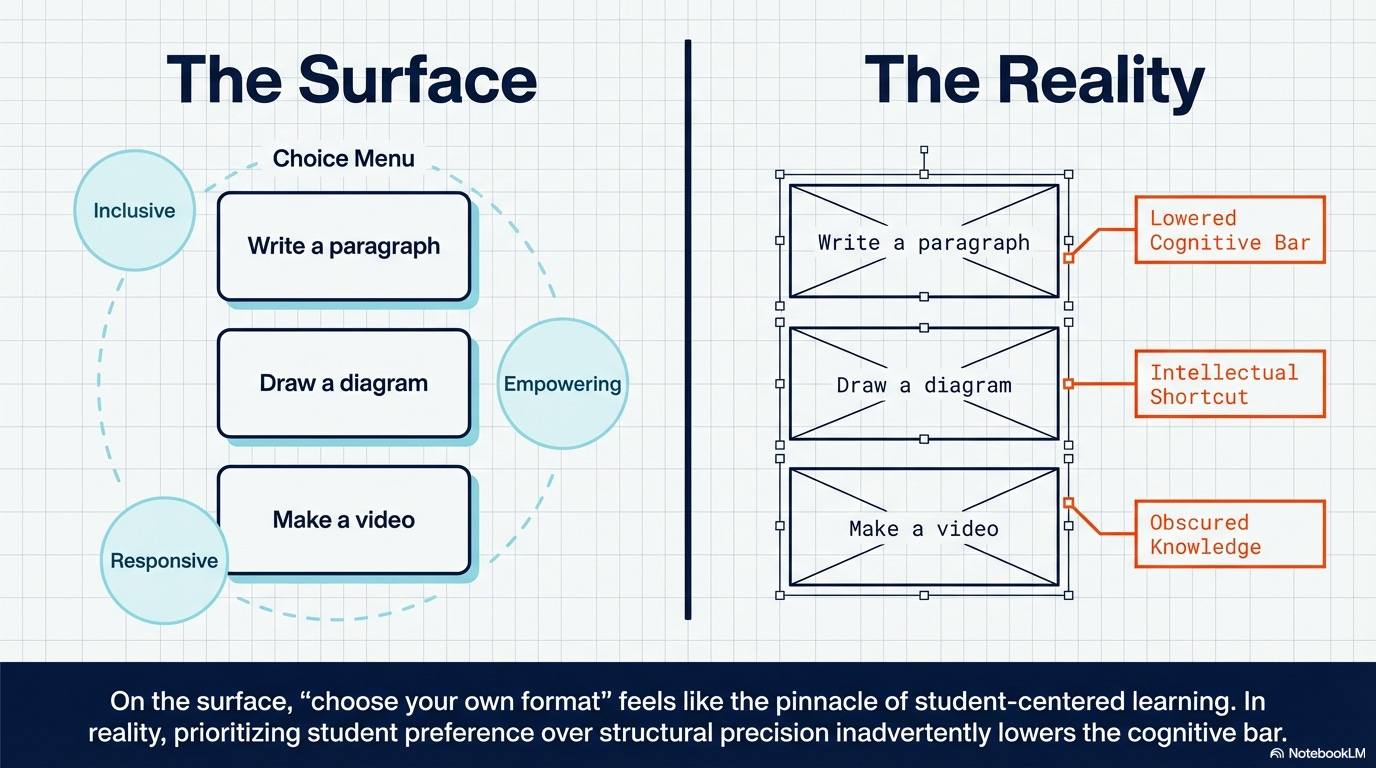
Walk into many progressive classrooms, and you are likely to see a similar situation. A lesson on a new, complex topic, perhaps the mechanics of a forest fire or the socio-political triggers of the Civil War, and the teacher offers the students a menu of “creative” options. "To show what you've learned," the teacher says, "you can write a story, draw a diagram, or record a video."
On the surface, this approach feels like the pinnacle of student-centered instruction. It is likely to evaluated by the powers that be as inclusive, equitable, empowering, and responsive to individual "needs." However, from the perspective of cognitive science, this "choose your own format" trend, most commonly labeled as Universal Design for Learning, is an intellectual shortcut that costs students the opportunity to build disciplinary knowledge and thinking. By prioritizing student preference over structural precision, we are not empowering learners. We are inadvertently lowering the cognitive bar and obscuring the very understanding we intend to build.
The "Learning Styles" Myth Persists
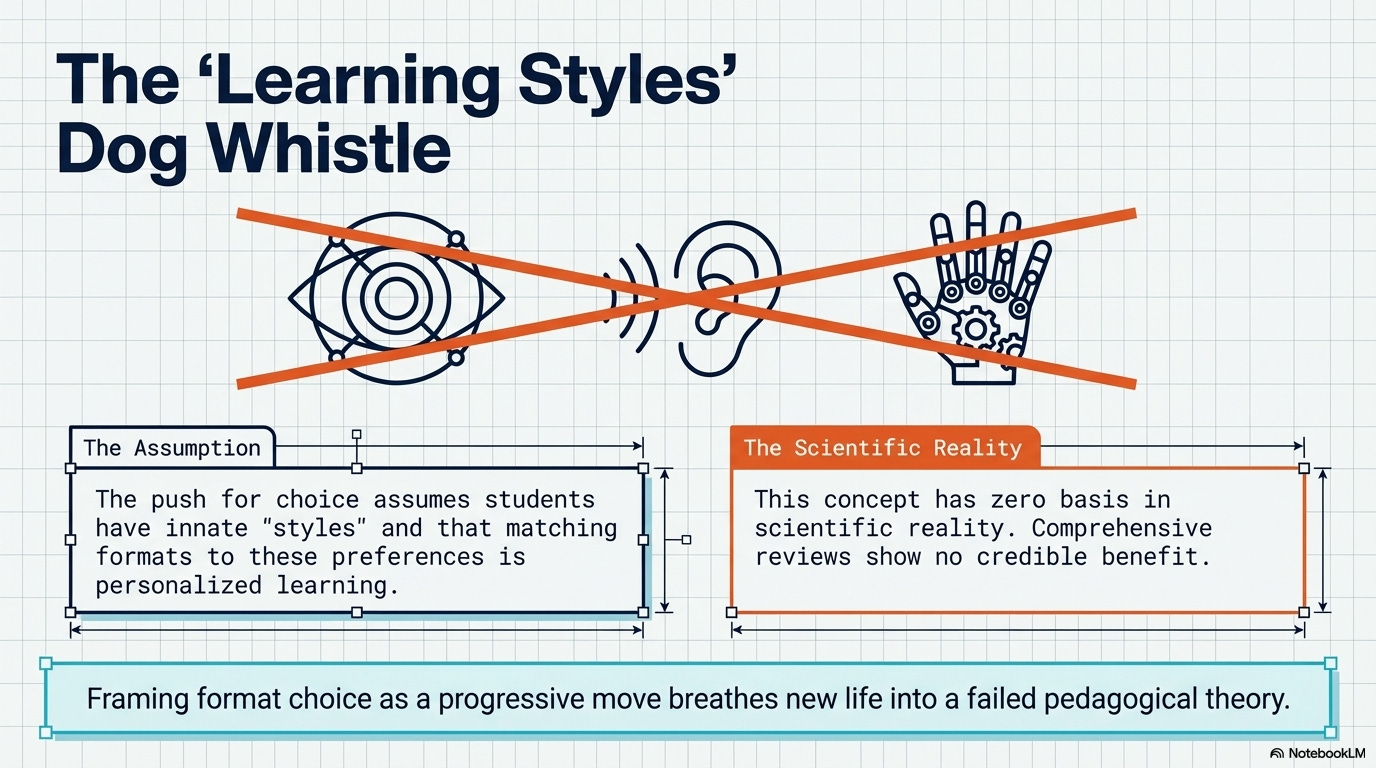
The push for choice is frequently a "dog whistle" for the long-debunked theory of learning styles. The underlying assumption is that some students are "visual learners" while others are "verbal learners," and that matching choice to these preferences is a hallmark of "personalization” and “differentiation.”
As an educator who respects and follows the evidence, it is critical to state the facts plainly: this concept has no basis in scientific reality. Comprehensive reviews have found no credible benefit to matching instruction to a student's preferred "style." When we frame format choice as being “student-centered”, we are actually breathing new life into a failed pedagogical theory.
Design is an Expert Decision, Not a Novice One
Another fundamental flaw of open-ended choice is that it asks students to make sophisticated design decisions they are entirely unprepared to make. A student still struggling to grasp the human and environmental dynamics of how wildfires start and spread cannot effectively determine whether a spatial diagram or a narrative paragraph will most accurately represent the relationship between the two. They lack the expert-level knowledge required to understand the functional relationship between the medium of expression and the content itself.
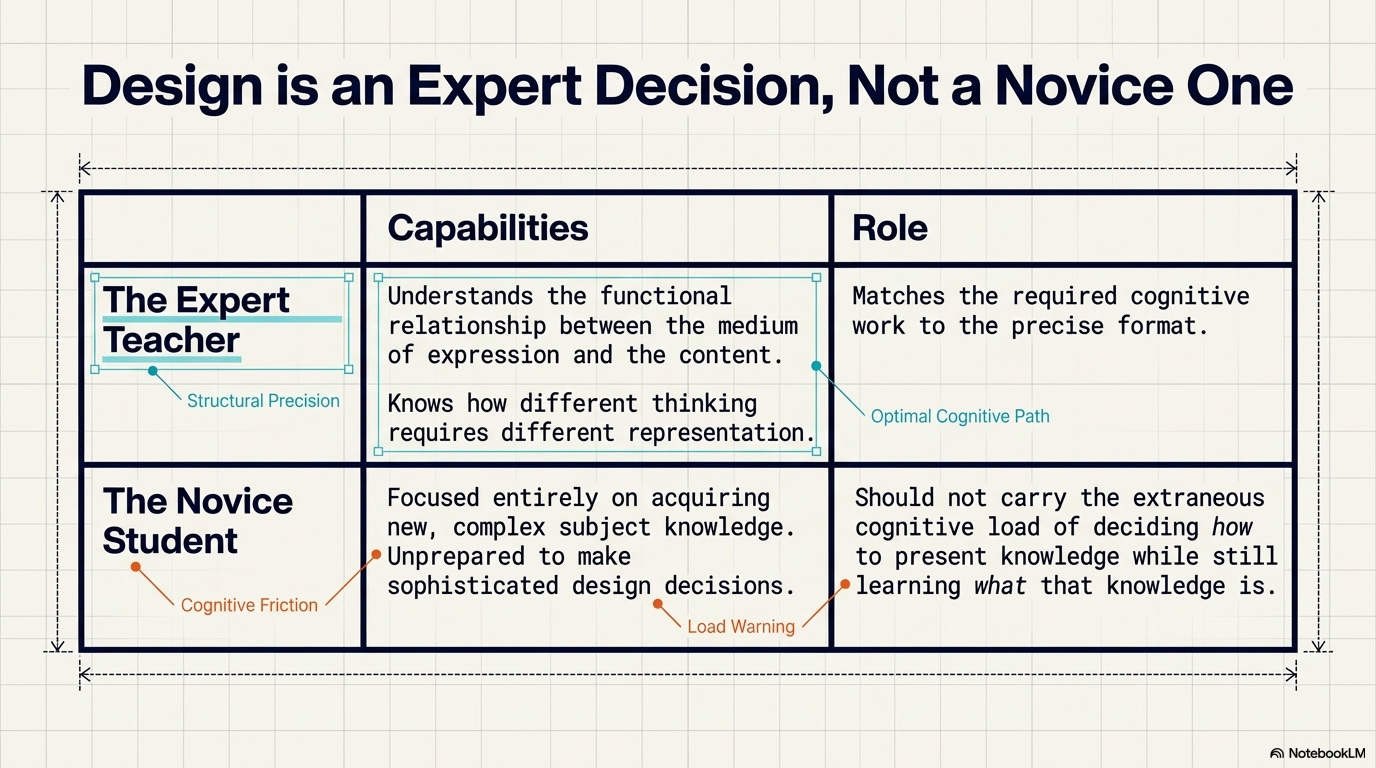
In an effective learning environment full of novice students, the roles are clear and distinct. There are no areas of grey:
The Expert Teacher: Understands that different types of thinking require different modes of representation. They know which format makes specific cognitive work more visible and effective.
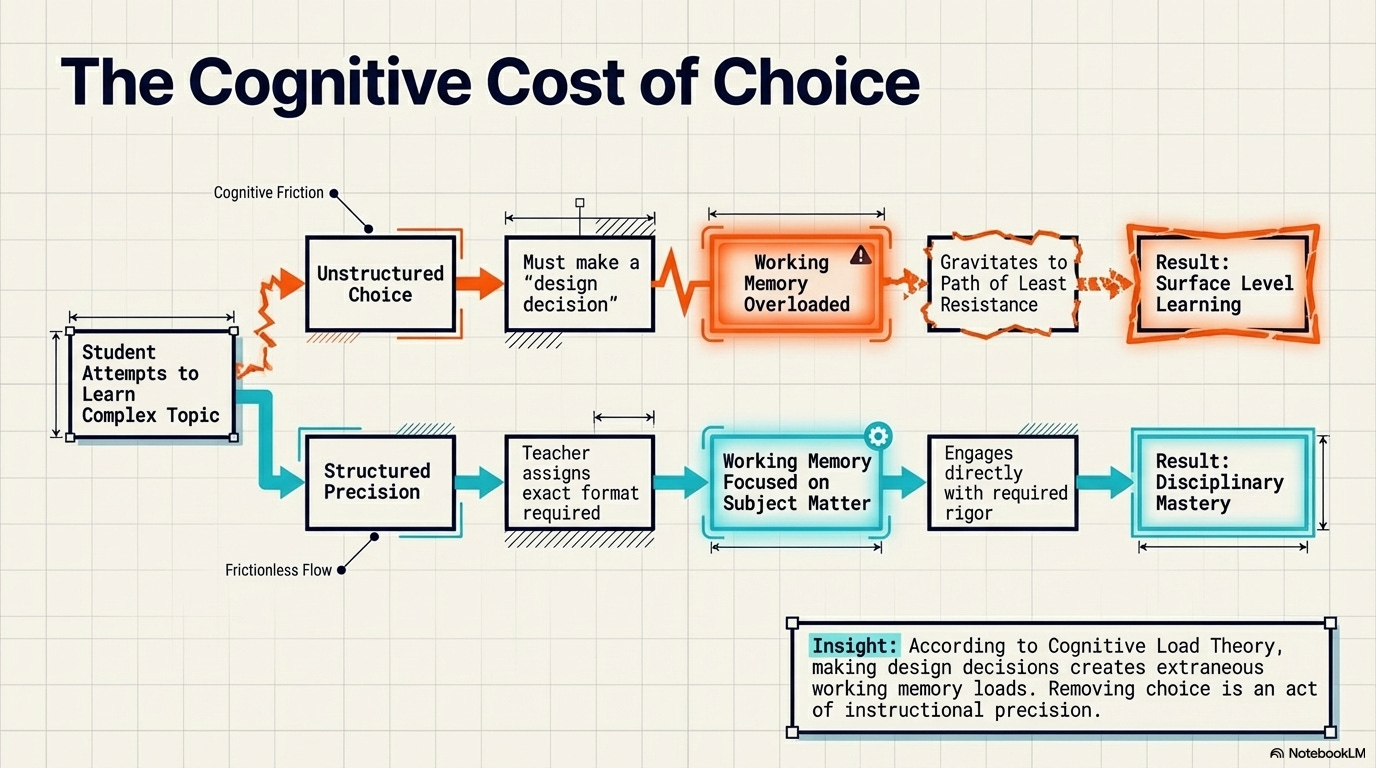
The Novice Student: Is focused on acquiring new knowledge. Asking them to also manage the "design decision" of how to present that knowledge creates an extraneous load that pulls working memory away from the subject matter.
Form Must Follow Function
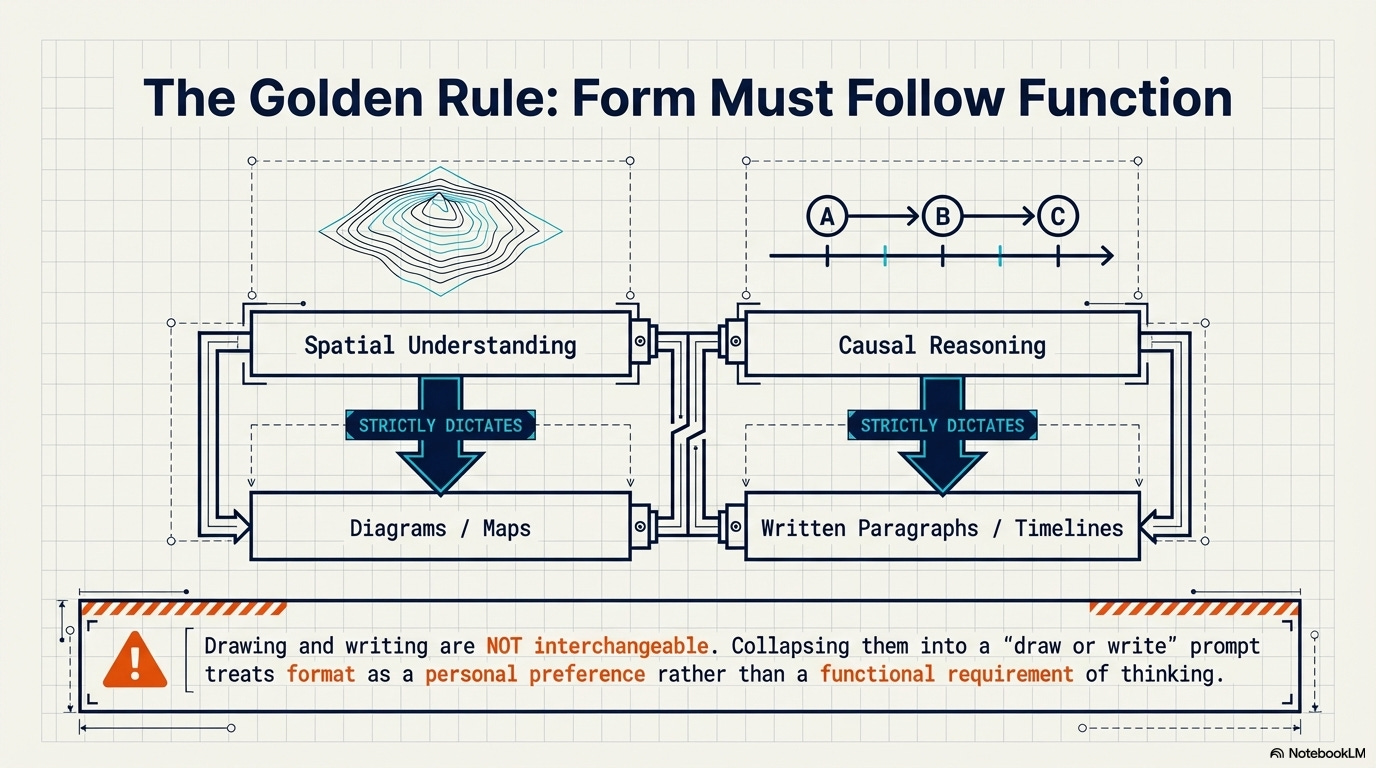
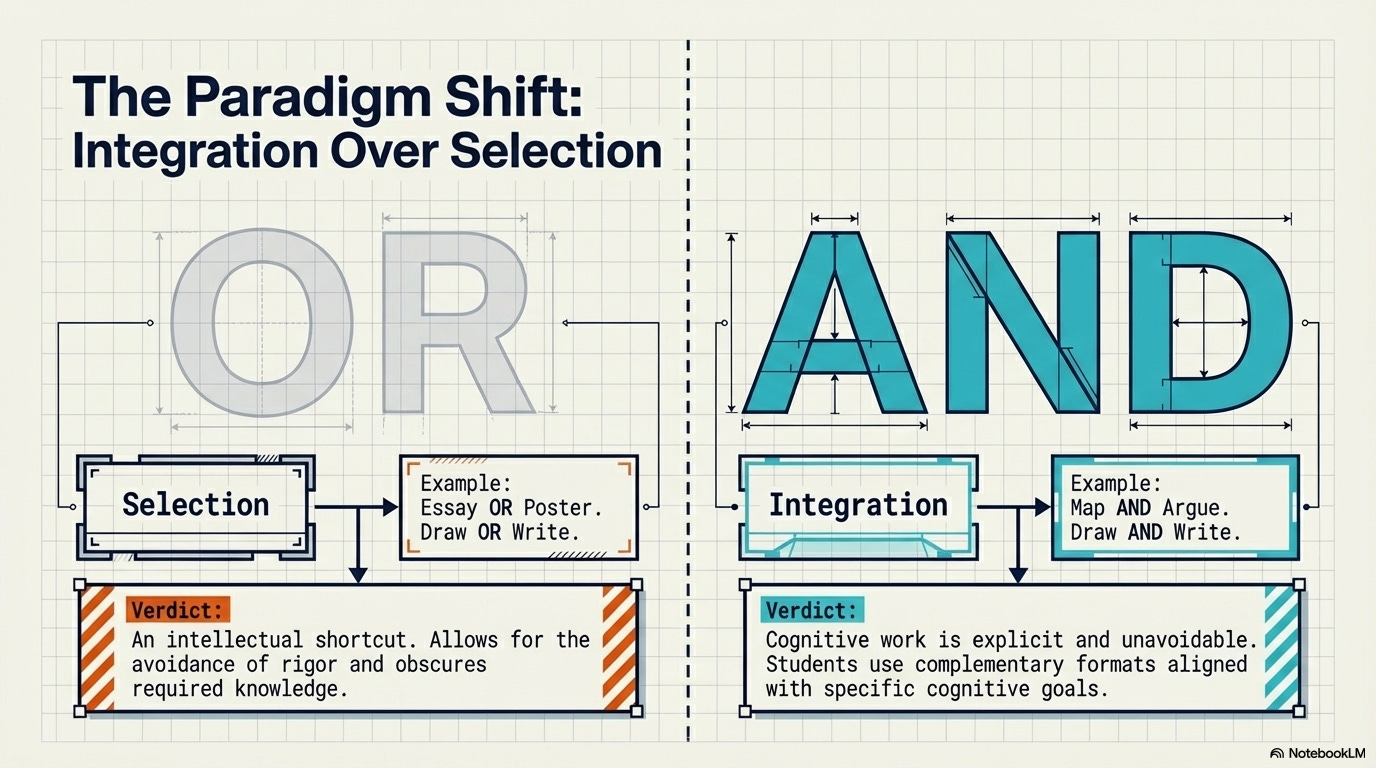
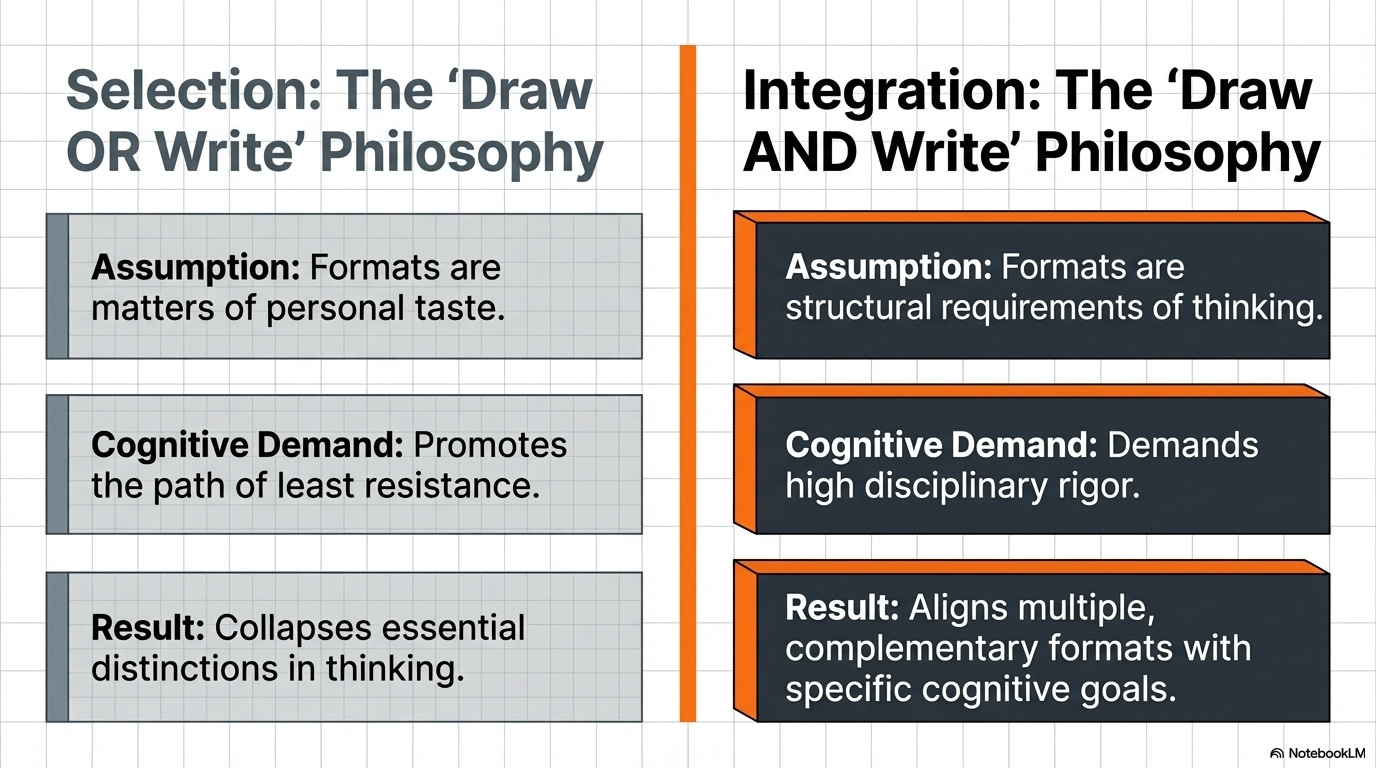
A core principle of effective instructional design based on the science of how humans learn is that the content should dictate the format, not the student's personal taste. When a teacher offers a "draw or write" prompt, they are effectively signaling that spatial thinking and causal reasoning are interchangeable. They are not.
By allowing a choice, teachers collapse these essential distinctions. They treat the format as a matter of preference rather than a functional requirement of the necessary thinking processes. The form of response should follow the content and the desired thinking processes.
The Danger of the Path of Least Resistance
According to John Sweller and Cognitive Load Theory, novices learn best when provided with clear, structured tasks. When students are given unstructured choices, they naturally gravitate toward the path of least resistance. If a student can substitute a simple sketch for a precise, written explanation of a complex mechanism, they most definitely will, and the cognitive demand of the task plummets.
Furthermore, the act of choosing is itself a cognitive load. Making "design decisions" creates additional working memory loads that compete for limited resources, roadblocking the student from the actual act of learning. Removing choice is not an act of restriction; it is an act of instructional precision that ensures every student engages with the required level of disciplinary challenge.
Integration Over Selection
The alternative to format choice is not a push for rigid, one-size-fits-all assignments, but a shift toward integration. Instead of allowing students to select one medium, we must require them to use multiple, complementary formats that align with specific cognitive goals.
A couple content-specific examples:
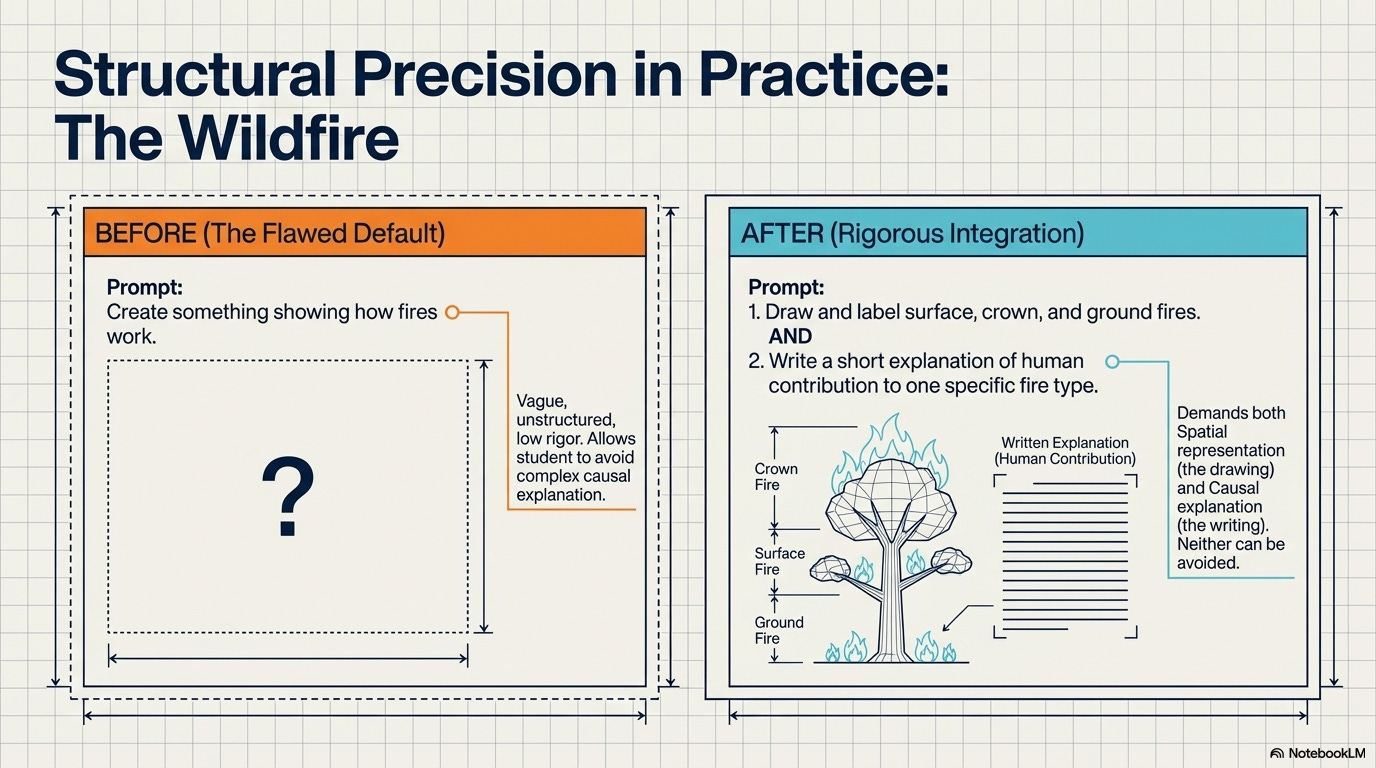
Rather than a vague "create something" prompt, a cognitively demanding task for the types of wildfires should require a drawing of a forest with surface, crown, and ground fires, each labeled and annotated for how it starts and spreads, followed by a short written summary of how each fire behaves uniquely and why. This task demands both spatial representation and causal explanation; neither can, nor should, be avoided.
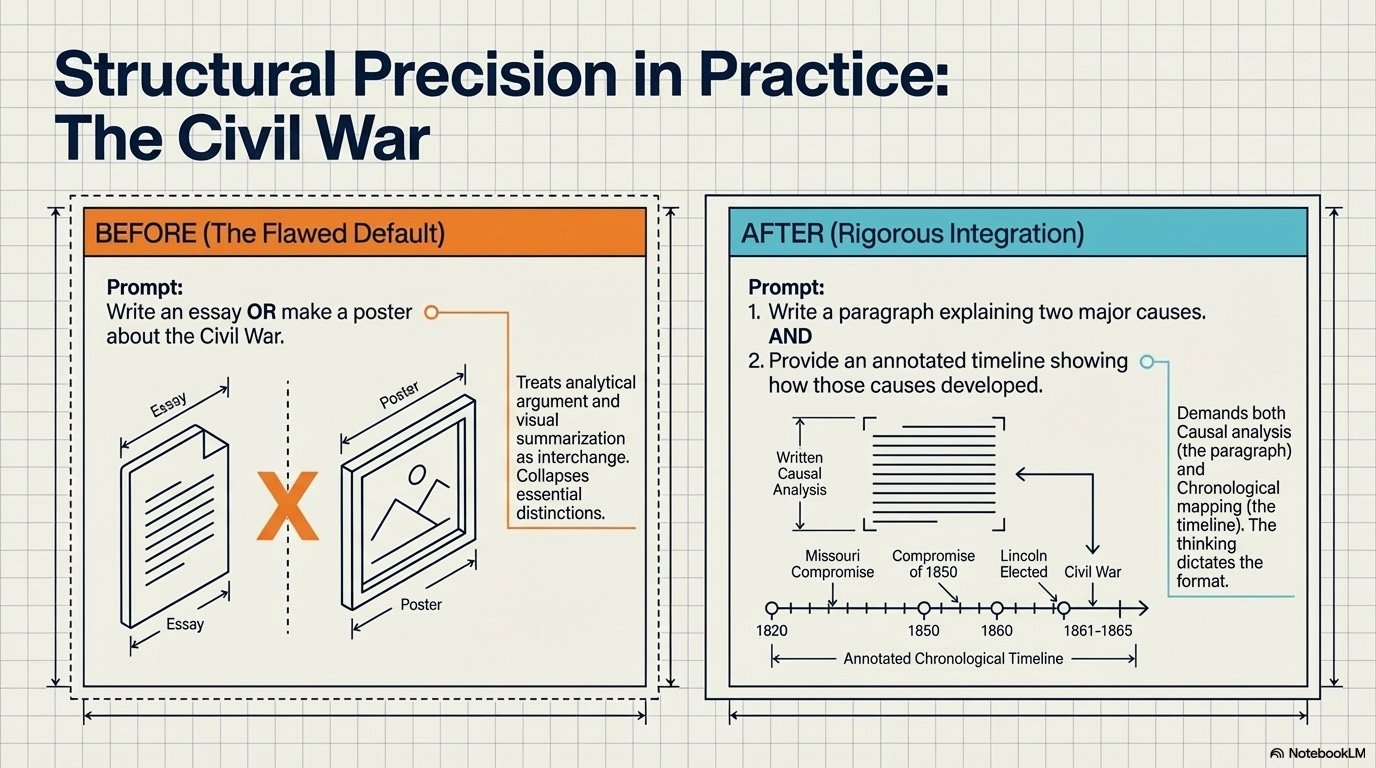
Rather than choosing between an essay or a poster, students should be required to write a paragraph explaining the major causes of the Civil War and provide an annotated timeline showing how those causes developed over time. Or, they might compare two accounts of a historical event in writing and then map the differences in claims and evidence. The format is not selected by the student; it is dictated by the thinking the content requires.
The Better Than Choice Default: The "Draw AND Write" Philosophy is most effective instructional default for integration rather than selection. Students should be expected to model and write, or map and argue. This ensures that the format is dictated by the thinking the content requires, making the essential cognitive processing explicit and unavoidable.
Precision as the True Goal
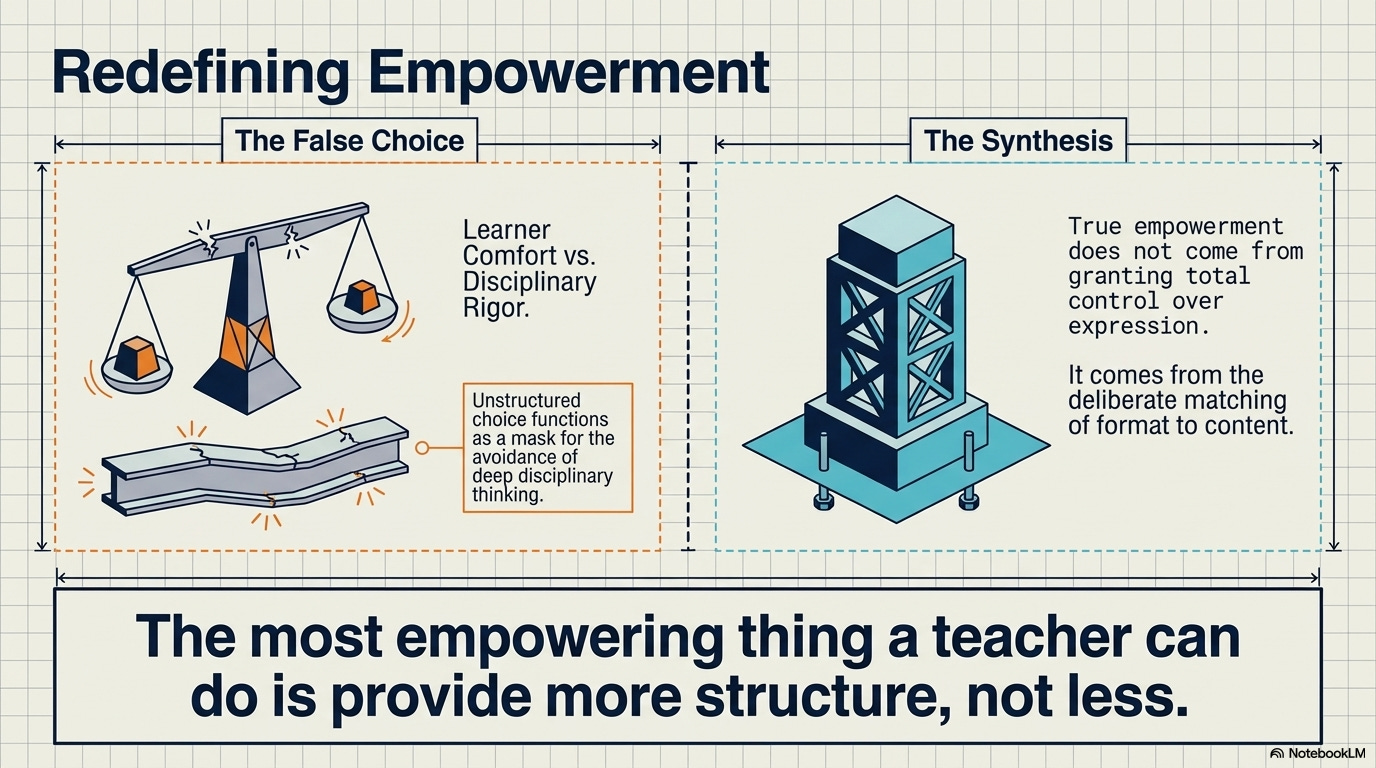
The shift from "responsiveness" to the "deliberate matching" of format to content represents a move toward greater instructional precision. While it may feel "empowering" to grant students control over how they express themselves, true empowerment comes from providing the structure necessary for cognitive growth.
Unstructured choice often functions as a mask for avoidance—the avoidance of precision, of structure, and of strong disciplinary thinking. As we evaluate the current student-centered trends, we must ask: are we prioritizing the comfort of the learner or the depth of their understanding? Perhaps the most empowering, student-centered action we can take is to provide more structure, not less.
I was introduced to UDL as a way to make digital texts, worksheets, and other materials accessible to students with disabilities. Things like font choices and using screen-reader-friendly organization. A month ago I went to a teacher conference and did some sessions on UDL. To my surprise, it was all about how providing choice and doing jigsaw reading was so much more interesting than teacher-led reading! In the lesson the teacher demo'd, any students with hearing differences, auditory processing difficulties, low reading level, etc would have been totally lost, nevermind EL students or anyone else who needed vocabulary, reading, or writing help.
But who says the choices have to be unstructured? Who says you must believe in learning styles to believe choice is important? There are many ways to offer meaningful choices which will allow students to engage more deeply in their learning without falling into those traps. Just because there is a possibility of doing something badly doesn’t mean we should avoid it altogether. If we believe it is important and beneficial we get educated and learn to do it well. It’s like your example of draw AND write, structure AND choice are not interchangeable or mutually exclusive - you can do both, and each will strengthen the other.